Overview
DigitalCube is the software company I work for, and this project was a full redesign of its own website: migrating from an aging Webflow build to a new site built with Claude Code. The redesign was not just a visual refresh. It was triggered by Claude Code arriving inside the company and reshaping how the team actually builds software, and the old site had no way to tell that story.
I was part of this shift myself, working inside DigitalCube as Claude Code changed the team's day to day process, and that firsthand experience shaped how I approached the redesign. The site needed to do more than announce that DigitalCube uses AI, it needed to explain what that actually means: which parts of the process involve AI, how those decisions get made, and why that is handled in a way clients can trust rather than as a black box.
My Role
As the sole UX/UI designer at DigitalCube, I owned the redesign end to end, from research and content direction through to building the final site in Claude Code, working with a backend developer to set up the contact form and the AI chatbot guide.
The Challenge
The previous DigitalCube website was built on Webflow and spoke to an earlier version of the company. It described a traditional software development process, used a tone and visual language that felt dated, and made no mention of AI at all, even though AI, and specifically Claude Code, had already changed how the team worked day to day.
As the market moved faster and clients started expecting to know how AI fits into a development process, the old site fell further behind. It could not answer the questions a prospective client would now ask: does this company actually use AI, how, and can it be trusted to use it safely and responsibly.
For a prospective client, visiting the site is part of vetting a technical partner before signing a contract. Their job isn't to browse a portfolio, it's to decide whether this company can be trusted with real work, so the site needed to give them evidence, not just the claim.
The new site needed to prove, not just claim, that DigitalCube is a company that understands modern tools and uses them deliberately.
Problem & Goal Statement
That problem sharpens into a precise statement and a clear goal to design against.
Key Decisions
The Solution
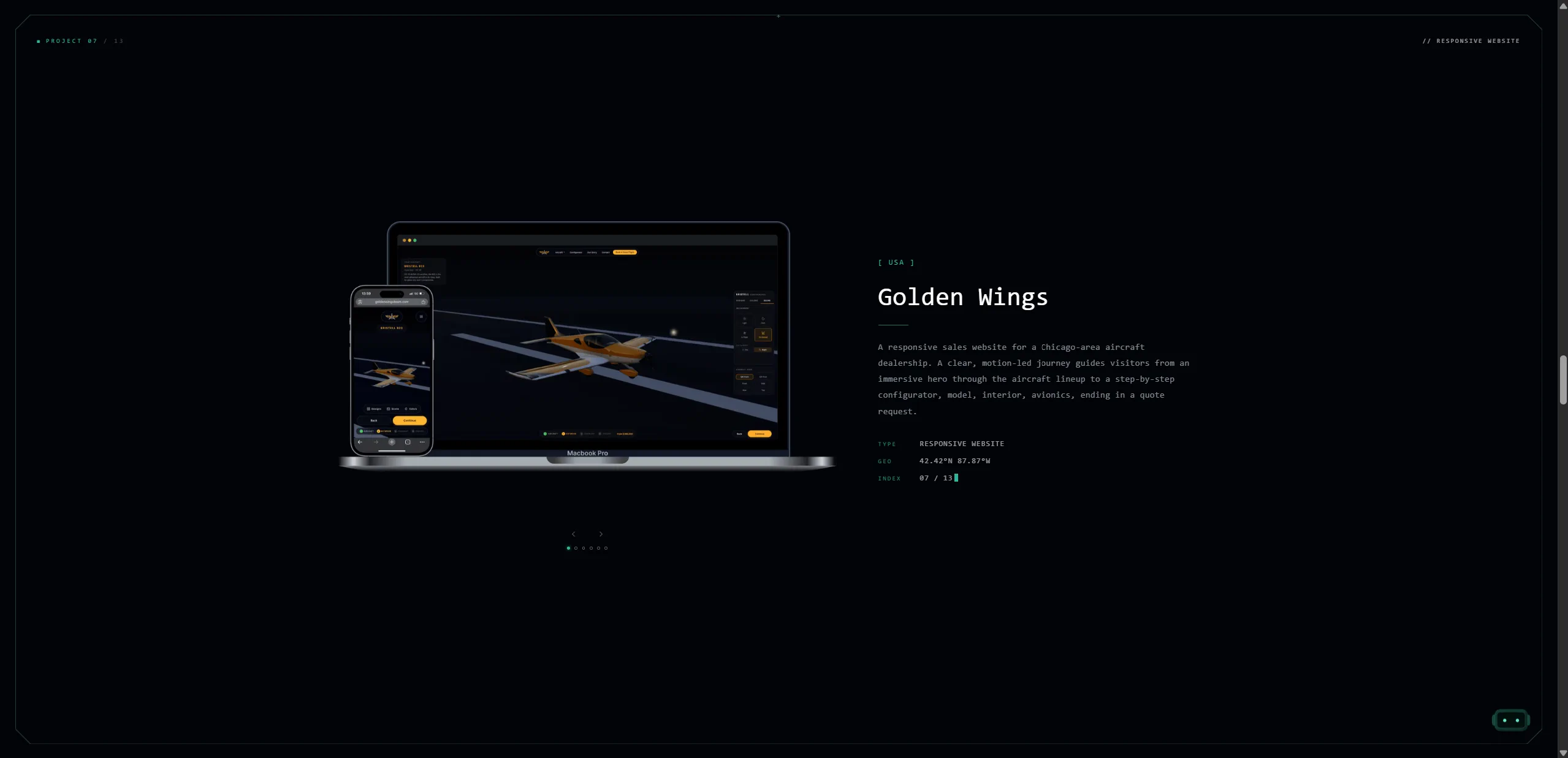
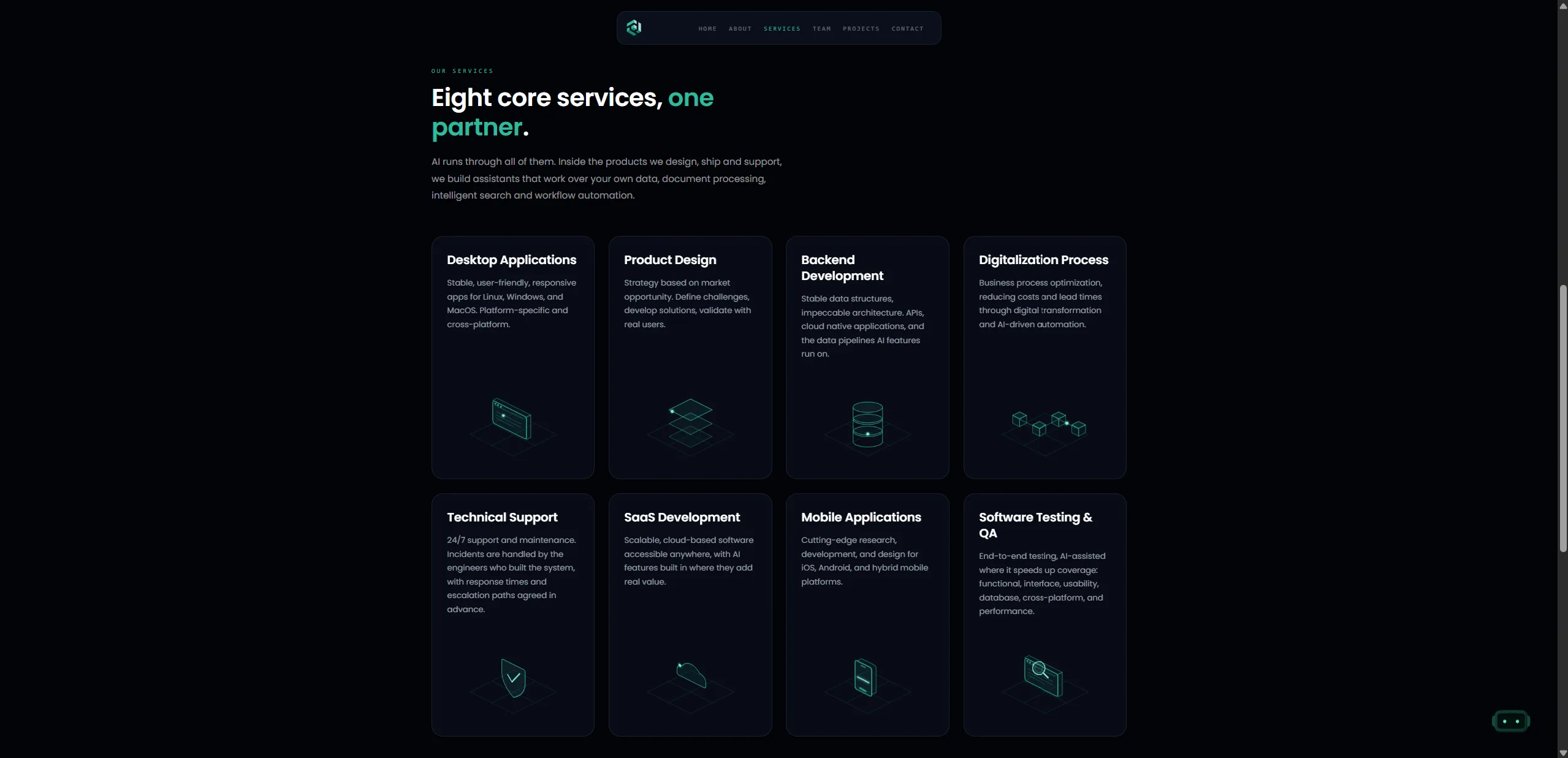
With that direction set, the redesign rebuilt every page of the site. The clearest way to see the shift is side by side: the old Webflow site against the new experience built in Claude Code.
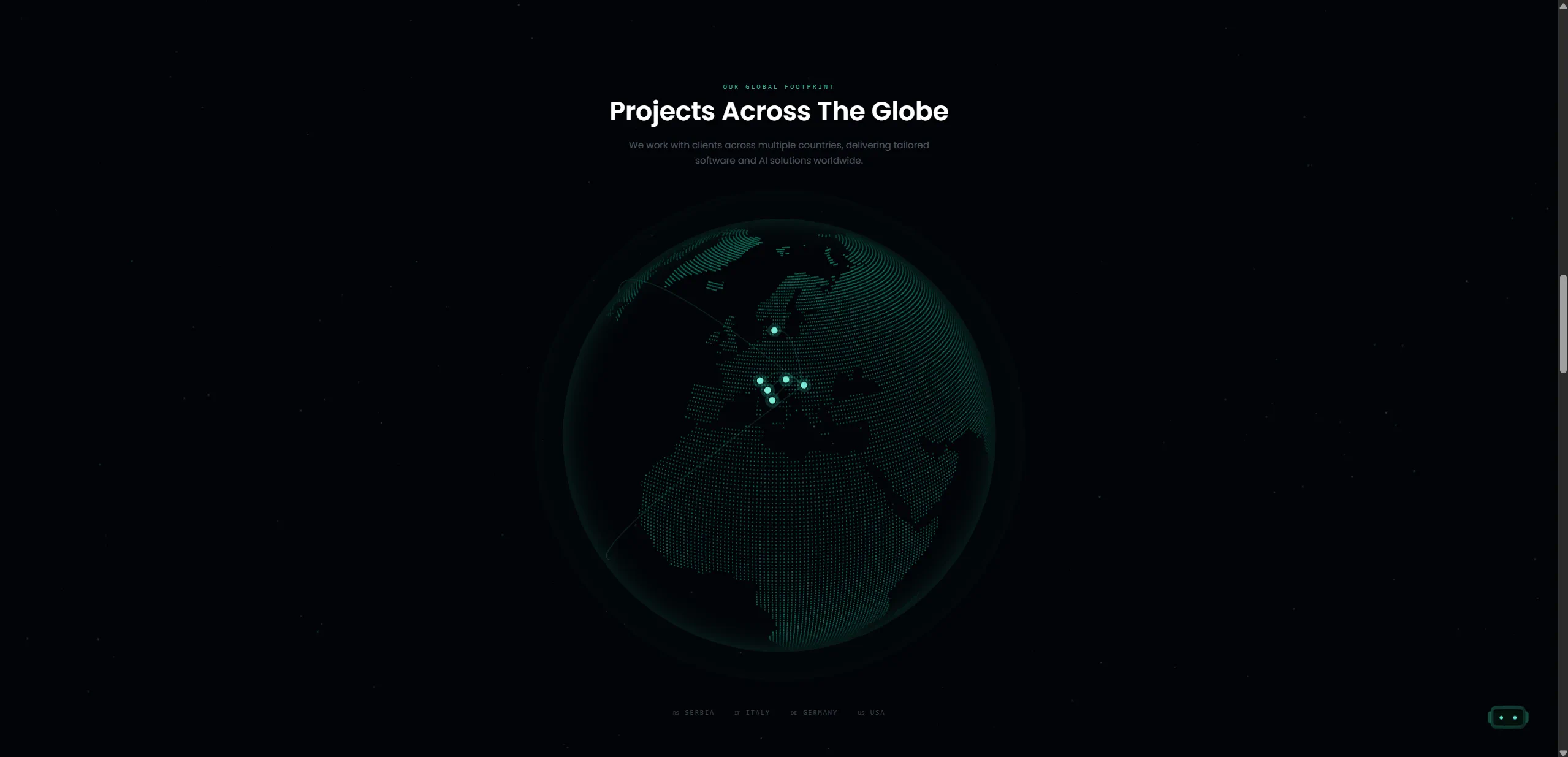
A new feature: the client globe
The old site had nothing like this. Built with Three.js, the globe shows the countries DigitalCube's clients come from and the projects built for them, so visitors can explore that reach directly instead of reading a flat list.
The DC Assistant: an AI chatbot guide
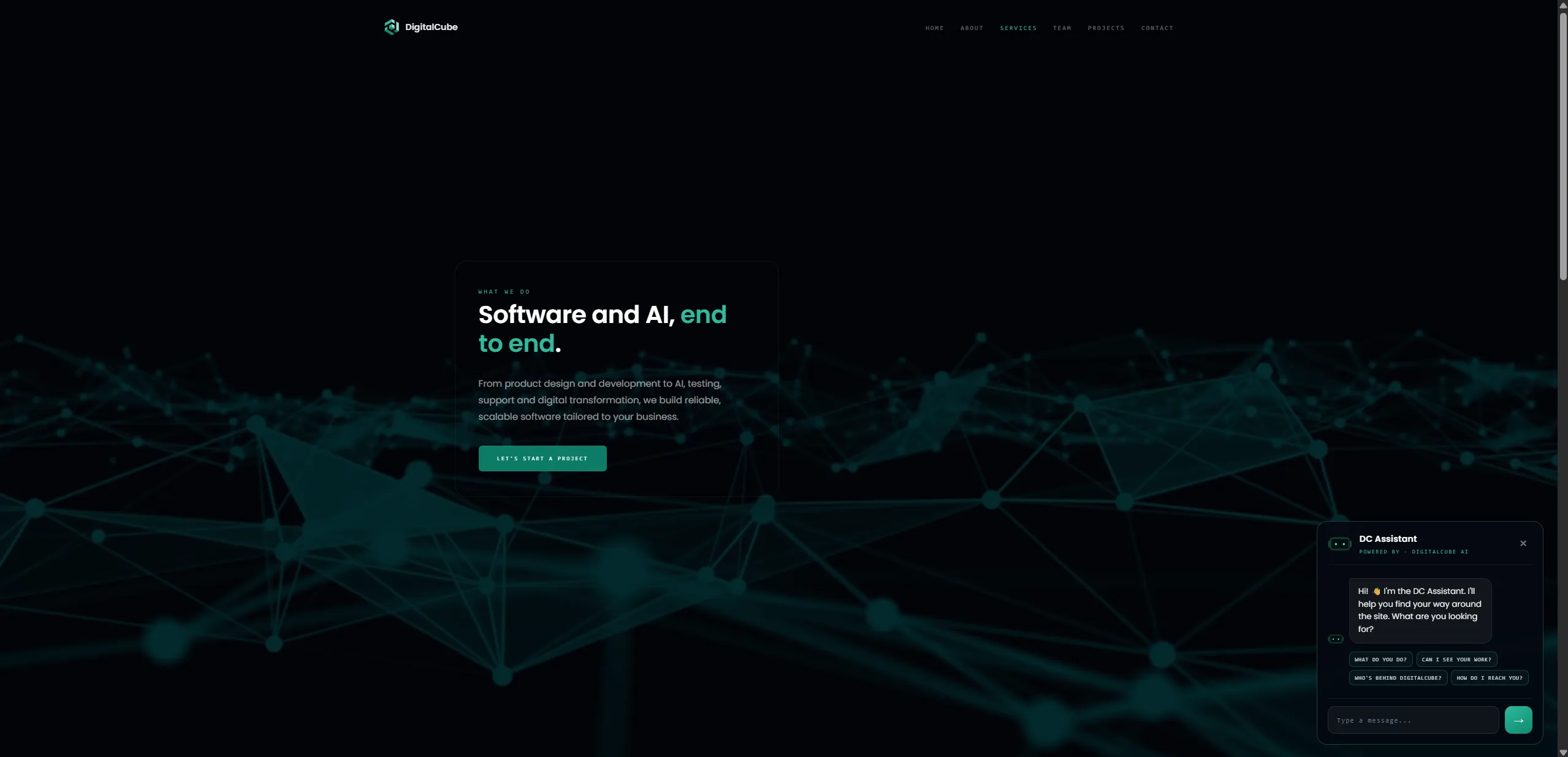
Live on the site, the DC Assistant is a chat widget that guides visitors around DigitalCube: what the company does, who is behind it, how to see the work, and how to get in touch. Built together with a backend developer, it is the clearest proof point on the whole site: instead of only describing how DigitalCube works with AI, the site puts AI in front of the visitor directly.
Outcome
The redesign moved DigitalCube from an outdated Webflow site with no mention of AI, to a live site built entirely in Claude Code that positions the company as a studio that genuinely works with AI, not one just claiming to.
The site is live at digitalcube.rs, and it now shows the AI-native process the old site could never speak to.
What I Learned
A website is a trust signal. This project pushed me to think about the site as a trust signal, not just a redesign. The real problem was not visual: the company had changed, and the website had not caught up.
A full rebuild can now be owned end to end. Building the entire site solo in Claude Code, and collaborating with a backend developer only where it mattered, on the contact form and the chatbot, taught me how much of a full site rebuild I can now own end to end.
A clear point of view is the strongest design choice. Reframing the story so it reads as a company that is deliberate and in control of its AI process, rather than one chasing a trend, was the most valuable design decision I made, more than any single visual choice.
Because the site has only just launched, I do not yet have real traffic or inquiry data. With time, I'd track how visitors move through the globe and projects sections, then refine the experience based on where real visitors actually engage.