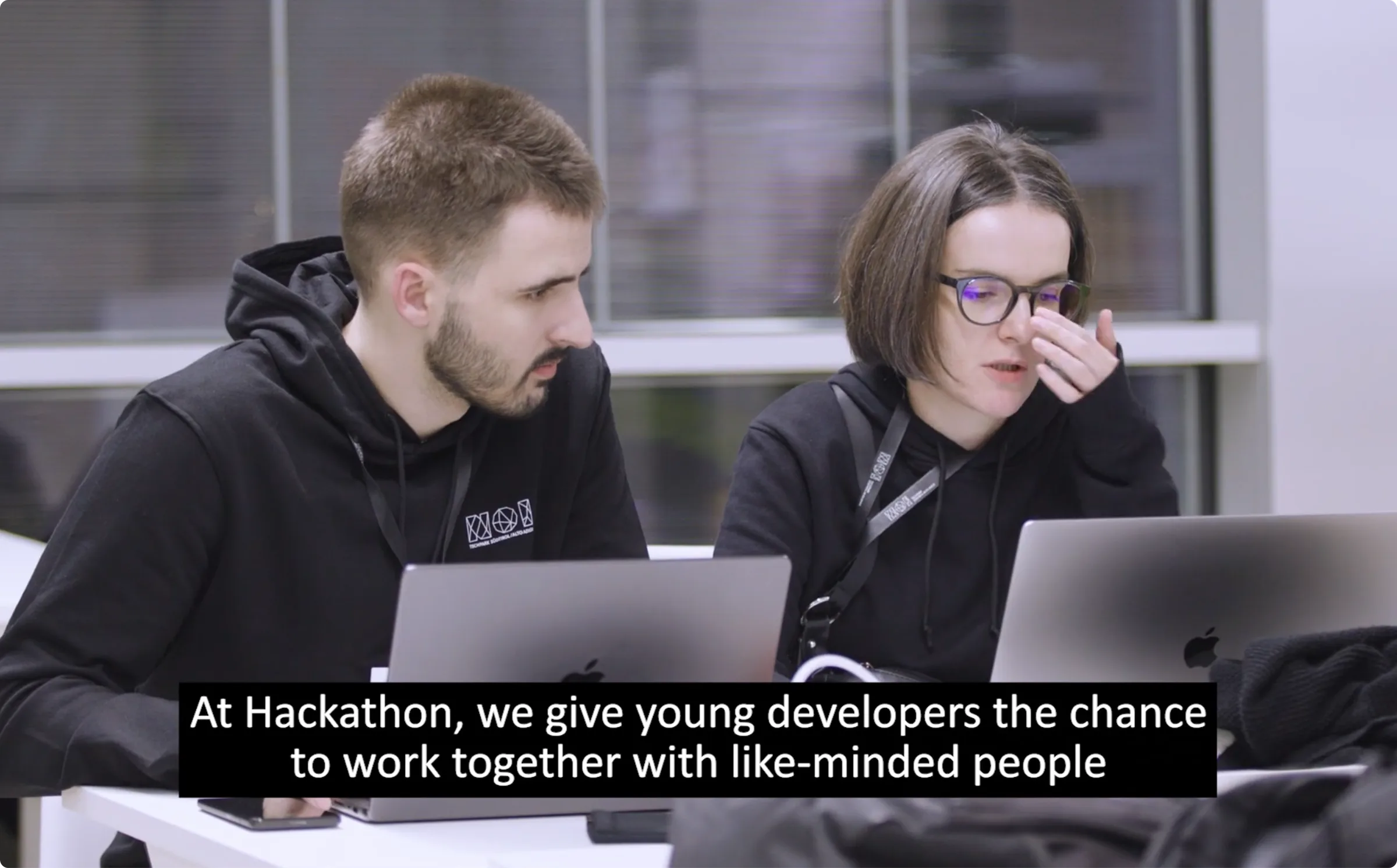
Overview
GRUBER Logistics challenged teams to automate the process of arranging transport with external suppliers when no in-house vehicles are available. The manual process involved dozens of daily calls, where employees had to consider supplier availability, location, pricing, and performance, often under tight time pressure and across language barriers.
Our DigitalCube team, myself as the sole UX/UI designer, one frontend developer, and one backend developer, created RouteBOT AI: an AI Price Tender Bot that acts as a virtual dispatcher, efficiently handling supplier communication and price tendering in the suppliers' native languages.
My Role
I was the sole UX/UI designer on the team, responsible for all UX decisions, interaction design, UI execution, the design system, the new logo, and the pitch presentation. All within a 24-hour hackathon timeframe, in constant collaboration with the frontend developer and the backend developer, providing Figma mockups and interaction flows throughout the event.
The Challenge
When GRUBER Logistics has transport orders but no available vehicles in a particular region, their employees must manually reach out to external suppliers, making dozens of phone calls every day to arrange transport.
During these agreements, the location of the supplier, their performance, and price are all taken into account. That work requires a lot of manpower and time. The company needed a faster, more efficient way to identify, evaluate, and contact reliable suppliers across Europe, minimising risk and human effort.
Instead of building unnecessary features, I focused on the chatbot's core functionality that the developers could create in the short time available: input, language, suggestion, and conversation. The goal was to prove the concept worked and could provide real value.
Users
GRUBER Logistics employees responsible for arranging transport with external suppliers across Europe. They work under significant time pressure, dealing with supplier availability across multiple countries, language barriers, and the constant risk of customer penalties for late shipments.
These users need to move fast. They don't have time to navigate complicated tools, they need a system that reduces their workload, not one that adds to it.
Research & Discovery
Given the 24-hour format, traditional discovery was not possible. Instead, it was compressed into fast alignment with the business problem, the client's brief, and the technical team's capabilities.
Key questions I needed to answer quickly:
Understanding the challenge brief deeply was the first design tool I had. GRUBER's real-world problem was clear: the manual, phone-based process was too slow, too dependent on individual employees, and too vulnerable to language mismatches and time delays.
The focus was ruthlessly on the chatbot's core functionality: input, language selection, supplier suggestion, and conversation flow. Every feature idea that went beyond that was set aside.
Problem & Goal Statement
That compressed discovery sharpens into a precise statement and a clear goal to design against.
Key Decisions
The Solution
Our solution, RouteBOT, was designed to transform a slow, manual logistics process into an automated, intelligent system. The goal was to help GRUBER Logistics respond faster and more efficiently when they receive transport orders in locations where they don't have available vehicles.
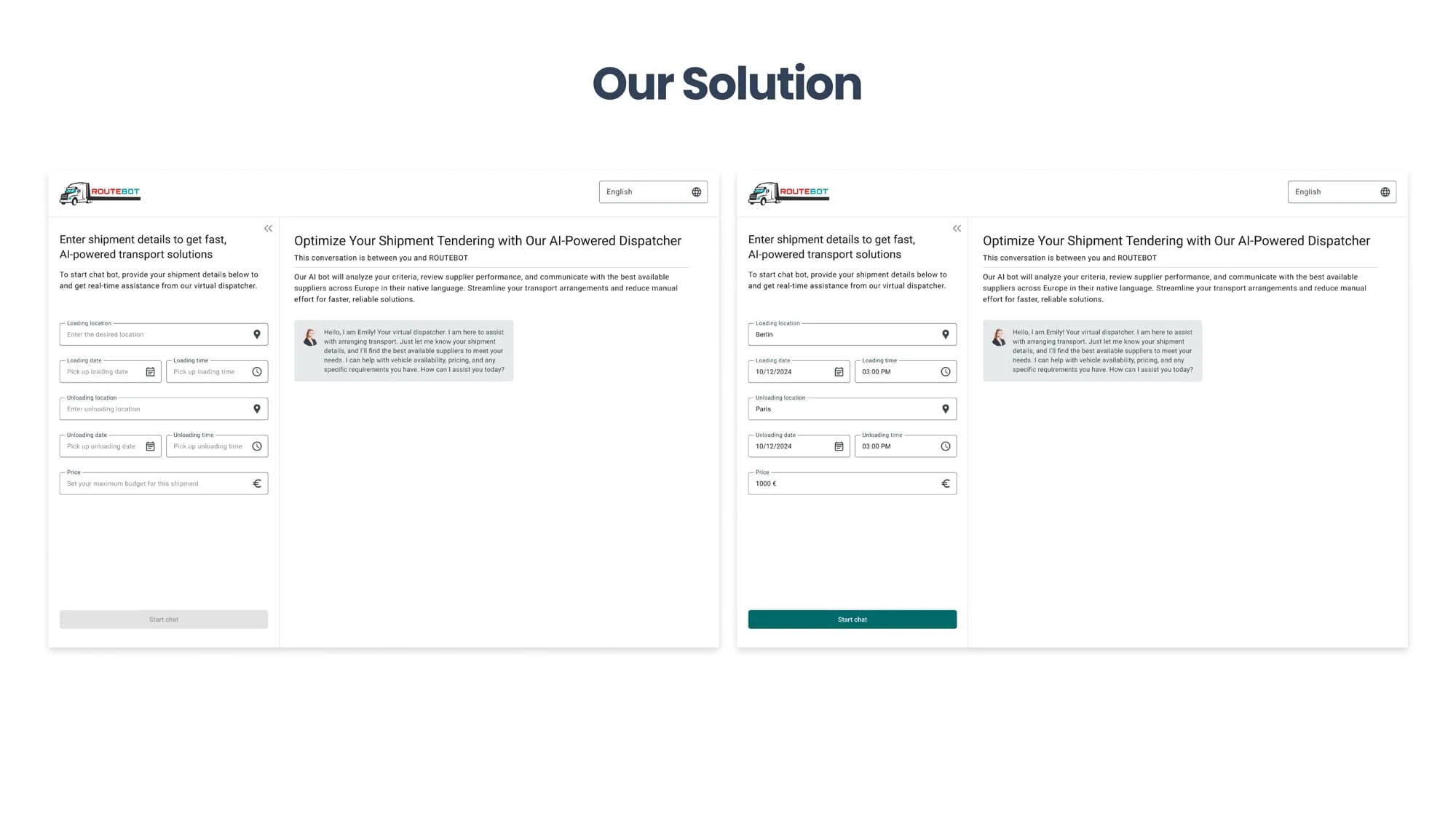
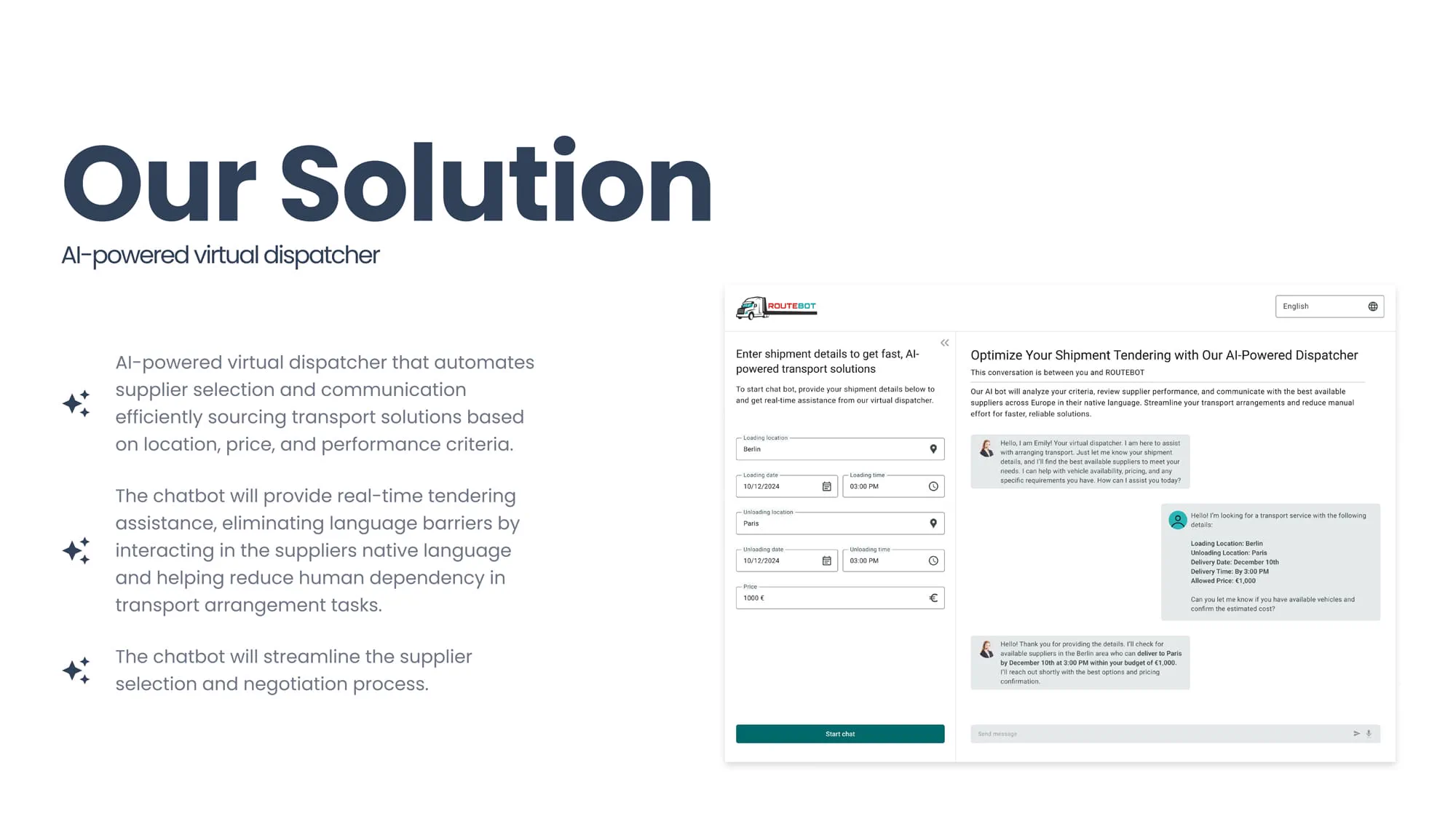
The entire design and implementation cycle, from first wireframe to working prototype, happened in a single overnight session.
Outcome
Working closely with the development team, I designed the core functionality of the interface within the 24-hour hackathon timeframe.
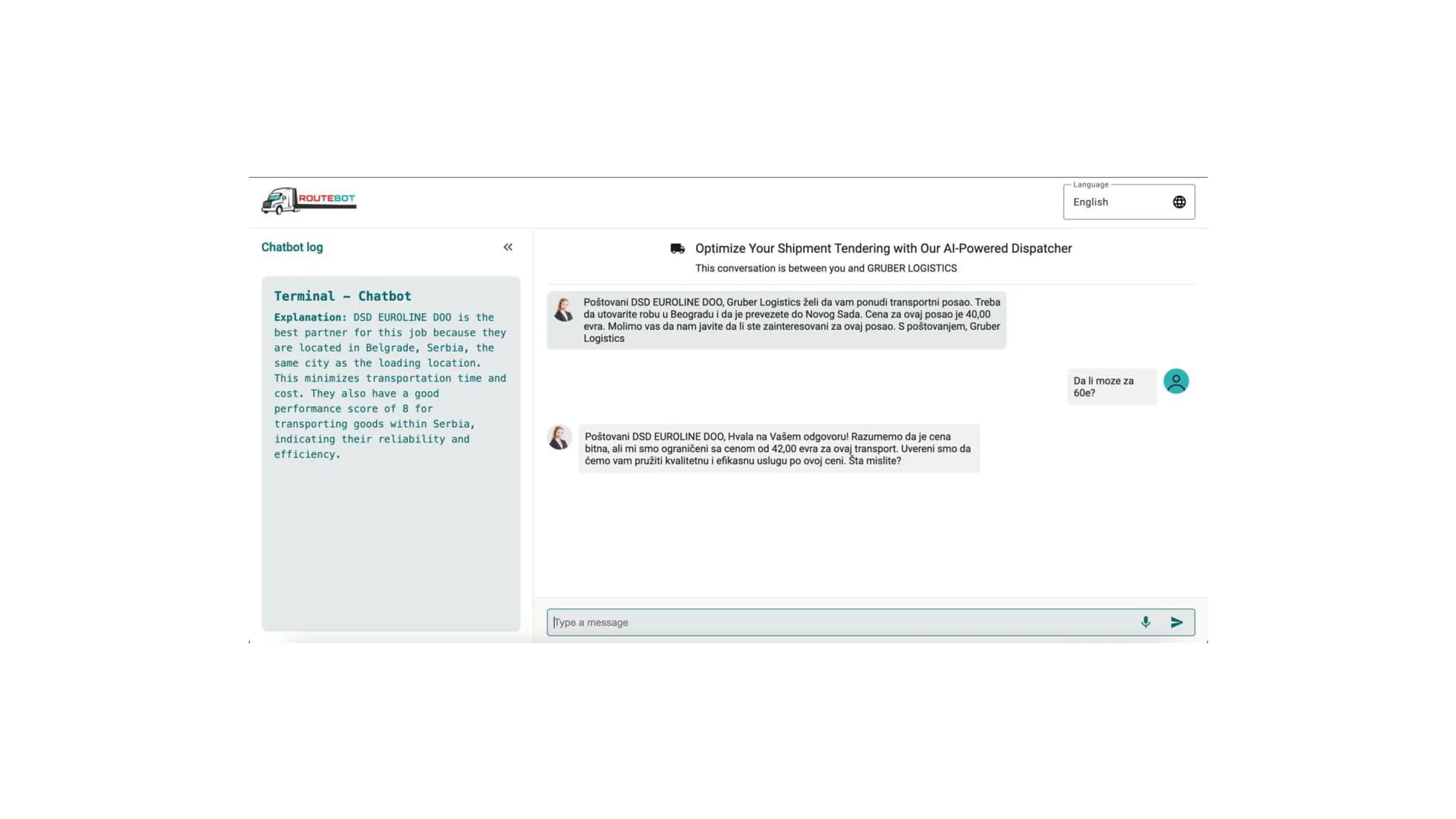
The developers implemented the designs directly into a working interface, with real-time updates pushed to GitHub, allowing us to test and refine the actual product during the event. This included the key feature: an AI Price Tender Bot that simulated conversations with suppliers, checking vehicle availability, negotiating prices, and overcoming language barriers.
What's shown here is the negotiation working as scripted for the demo. A supplier who declines, misunderstands, or replies off-script is a real scenario the 24-hour build didn't get to design for, see Learnings below.
.webp)
.webp)
.webp)
.webp)
.webp)
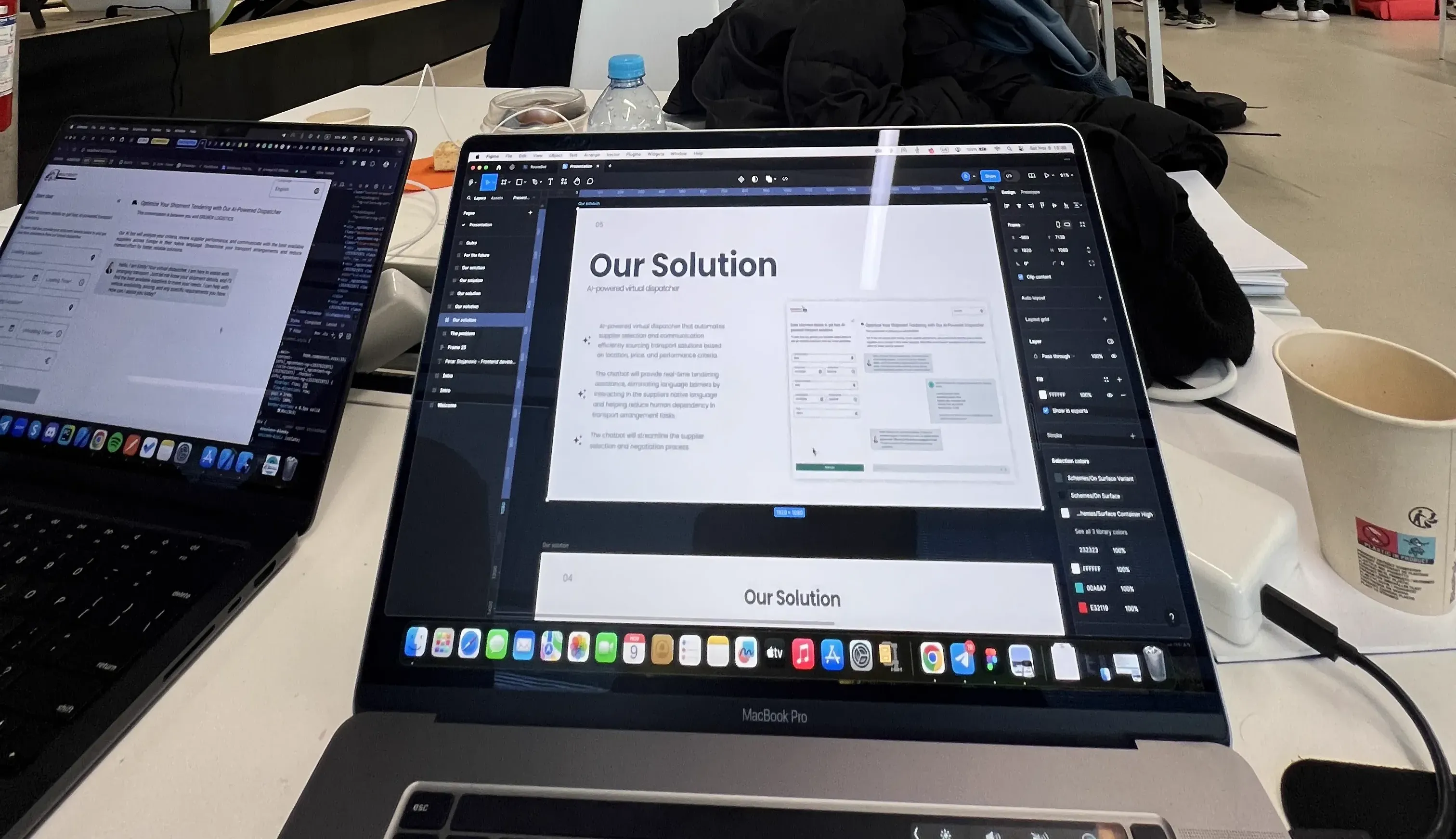
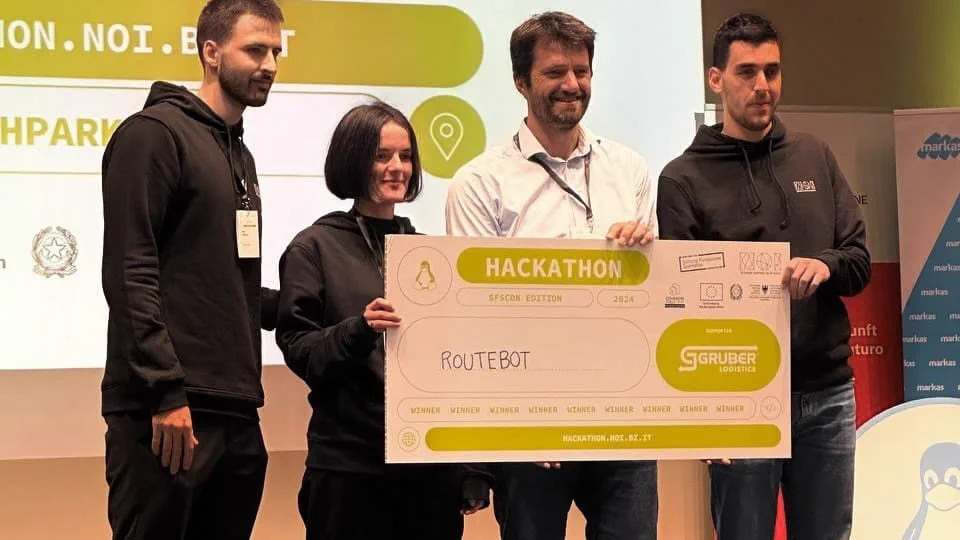
Despite the time pressure and sleepless nights, the result was a solution that solved a real problem for GRUBER Logistics and won first place in the GRUBER Logistics Challenge. It showed real potential to save time and reduce operational stress for GRUBER's logistics teams.
RouteBOT minimises delays, reduces the risk of penalties from late shipments, and significantly cuts down the manual workload for GRUBER's teams.
What I Learned
Pressure sharpens decisions. This experience significantly contributed to my growth as a designer, specifically my ability to solve challenges and problems rapidly, manage time effectively, make the right decisions under pressure, and collaborate closely with developers to transform a concept into a functional product.
Problem framing matters most when the clock is running. The biggest lesson was about the value of fast, focused problem framing. When time is limited, the most important thing a designer can do is deeply understand the core problem and resist everything that doesn't serve it. Clear problem framing is the most valuable thing a designer can offer when the clock is running.
Design is communication, not just visual output. Working in a hackathon environment, with real client requirements, real judges, real developer constraints, and a hard deadline, also reinforced how much design is about communication and prioritisation, not just visual output. The design system, the logo, the Figma flows, and the pitch presentation all had to work together as a cohesive whole. That only happens when the designer is deeply embedded in the team and the process, not working in isolation.
RouteBOT was designed and built in 24 hours, so decisions were based on logic and quick assumptions rather than real user research. With more time, I'd validate the AI Price Tender Bot flow with real dispatchers and suppliers, design for the messy edge cases a live negotiation creates (a supplier who declines, misunderstands, or replies off-script), and pressure-test how the system communicates trust and control when an AI is negotiating on the company's behalf.